Facts
1. Jeffery Rossen wrote the Constitution 3.0 and Freedom and Technological Change
2. The Fourth Amendment only prohibits the government from unreasonable search and seizure.
3. The case United States v. Jones is about whether police need to have a warrant from a judge before attaching a secret GPS monitor to a car to track a suspect around the clock
4. The Patriot Act expands the amount of surveillance it can do with out a warrant.
5. Twitter was pressured to remove pro-Taliban tweets.
6. People do not need to give consent for the pictures being taken by Google Maps.
7. The lines regarding privacy are very different between American and Europe
8. Google has been under pressure from the U.S. government to remove terrorist videos from YouTube, but claimed that they were protected speech.
9. The Obama administration says that we technically do not have privacy in public because it could be possible for someone to put a tail on us or for the police to track us for 100 miles.
10. In France the right to oblivion is legal right to escape your past via the internet according to the French Data Privacy Commissioner.
Questions
1. Are more things on the internet monitored without us knowing?
2. Will the internet ever be completely censored by the government?
3. What information are governments afraid for people to find out?
4. How will all social networking sites be affected in the future?
5. Could there potentially be a standard way for all countries to block certain things?
Sunday, December 18, 2011

Bills
1. H.R. 1676: Tanning Bed Cancer Control Act of 2011- Sam
2. S:1108: 10 Million Dollar Solar Roofs Act of 2011- Jason
3. H.R. 3403: Save Christmas Act- Justin
basis for constituent letter = S:1108: 10 Million Dollar Solar Roofs Act of 2011
2. S:1108: 10 Million Dollar Solar Roofs Act of 2011- Jason
3. H.R. 3403: Save Christmas Act- Justin
basis for constituent letter = S:1108: 10 Million Dollar Solar Roofs Act of 2011
National Debt Issue of the Week

1. How does our debt compare with other countries' debts?
http://www.creditloan.com/blog/2008/10/30/americans-debt-to-income-ratio-as-compared-with-other-countries/

2. Is their any plan in the making or in affect that will lower our debt?
http://money.cnn.com/2011/09/19/news/economy/obama_debt_plan/index.htm
Obama unveiled a plan on Monday to cut the national debt by roughly $3 trillion over the next decade. His idea is that high-income individuals and corporations should pay more in taxes than they do currently.
3. At what rate is the debt increasing?
http://cnsnews.com/news/article/obamas-increasing-federal-debt-1148-month-household-enough-buy-car-or-pay-tuition-state
The national debt is increasing at a rate of $1,148 per month per household. Interesting fact="For the $31,020 per household the federal government has borrowed since Obama became president, it could have paid one full year of the average tuition at a private college for every household in country and still had $3,727 left over".
Friday, December 16, 2011
Electoral College Reform
Facts
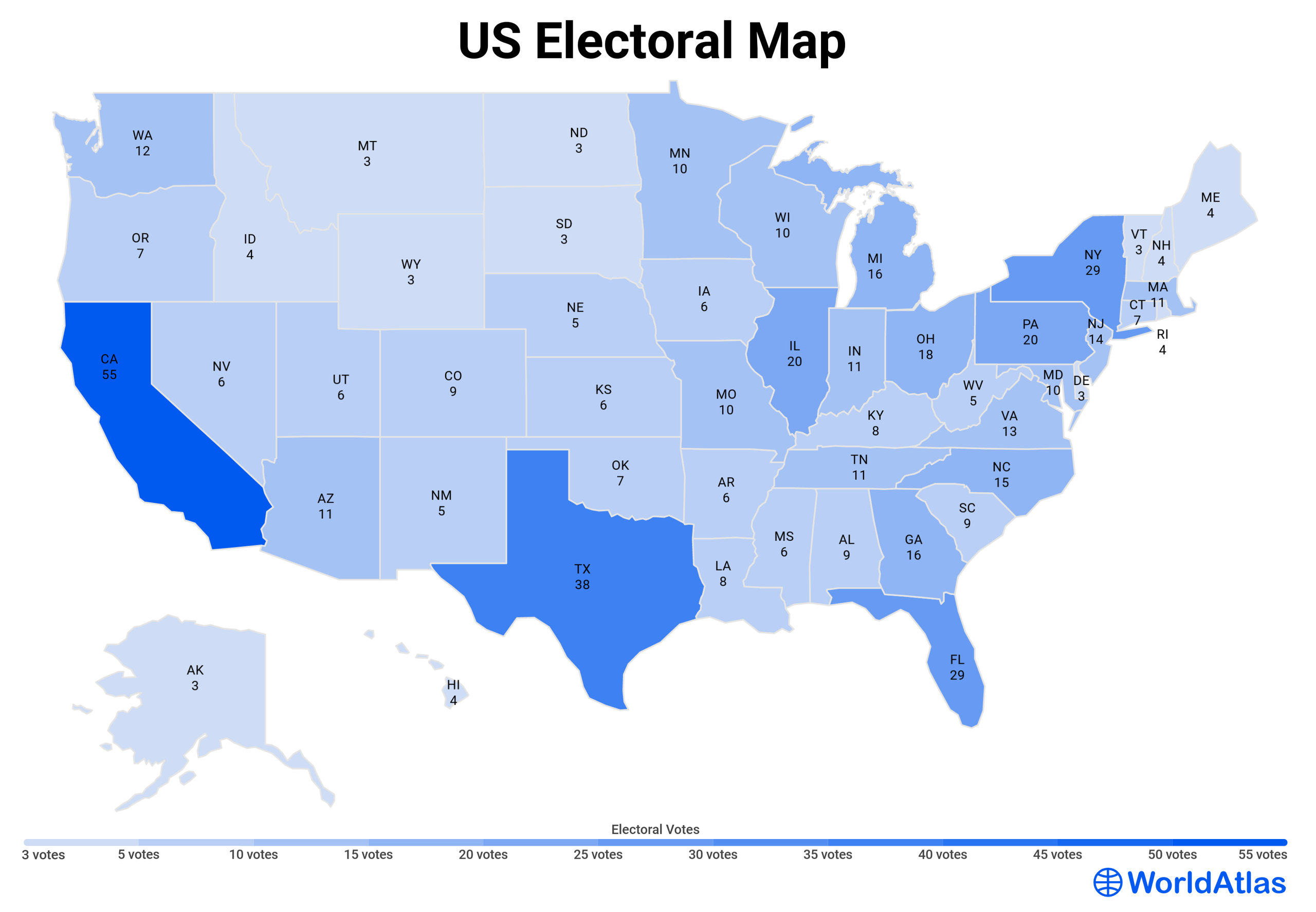
1. Each state gets two electoral votes no matter what their population is.
2. A constitutional amendment has given DC three electoral votes
3. There are no limits on the electors' choice among candidates
4. Close to 700 amendments have been proposed that would reform or get rid of the Electoral College.
5. Bush vs Gore is a strong example of how much of an influence the Electoral College has.
6. Democratic voters are more likely to spoil their ballots.
7. There are a total of 538 electoral votes and a candidate need a majority of 270 for election
8. In order to win an election the candidate needs a majority of 270 electoral votes.
9. Many states have passed laws requiring electors to honor their pledge to the candidate who selected them.
10. Bush actually lost the popular vote in his election.
Questions
1. What would happen if there were more electoral votes?
2. Where did the number 538 come from?
3. Why are Democrats more likely to spoil their ballots compared to Republicans?
4. How would the founding fathers react to the status of our current system?
5. What are the consequences if an elector is found out that he wasn't being honest?
Opinion
I can definitely see why people have a problem with the Electoral College. Many problems seem to have arisen from this particular system. However, I do not think a rash decision should be made regarding whether it stays or goes. So far it has been working moderately efficiently and therefor is okay to remain in tact for the meanwhile.
Political Cartoon

2. How much easier would it be if each president came into power with a clean slate?
3. How are presidents viewed because of previous problems that didn't even occur when they were in office?
4. Will it ever get to a point where the problems accumulate so much that the US is left at a stand still and can not solve anything?
Friday, December 9, 2011
New York Times Budget Simulation
Save 2015: $373 billion
Save 2030: $1,287 billion
tax increases: 11%
spending cuts: 89%
The choices that were easy were cutting foreign aid because at this point it is the governments responsibility to take care of its own citizens, not other country's. Also it was easy to cut military costs. My logic is that if we spend money on nuclear weapons than there is no need to have troops all over. I did not want to raise taxes so I tried not to. What was heard was dealing with medicare because it is a sticky situation. I am sure it is extremely hard to go through Congress because everyone has their own reasoning for what they want to cut.
President Research
William Henry Harrison
 Sources
1. http://www.whitehouse.gov/about/presidents/williamhenryharrison/
2. http://millercenter.org/president/harrison
3. http://www.bookrags.com/biography/william-henry-harrison/
4. http://www.encyclopedia.com/topic/William_Henry_Harrison.aspx
Lesson
1. He emphasized in his Inaugural that he would be obedient to the will of the people as expressed through Congress. Presidents need to keep in mind that they are working for the people, not to promote themselves.
2. Harrison served the shortest time of any American President—only thirty-two days. This should teach presidents that they need to take advantage of the time they have in office and really accompligh things.
3. He gained fame as an Indian fighter and military hero before becoming president. This shows that modern presidents need to do something positive before they run to get their name out to the public.
4. Harrison refused to take a stand during the course of the campaign. Maybe presidents need to focus on the issues at hand, rather than the political party they represent.
5. In 1840, he again ran against Van Buren, with john tyler as his running mate. The race has been viewed by historians as the first modern presidential campaign, one with advertising and slogans. Presidents can learn from this that advertising really benefits one's campaign process.
Campaign Ad Analysis
Techniques
1. http://www.livingroomcandidate.org/commercials/1984/supermarket#4383
Humerous- This ad was not really serious, so the viewer did not feel pressured while watching and more so could just enjoy it and take in what Reagan had to say. Slightly effective.
2. http://www.livingroomcandidate.org/commercials/1992
Accomplishments- This ad described what Clinton had already done and therefore made you think that he will accomplish great thing while in office. Effective.
3. http://www.livingroomcandidate.org/commercials/2004
The Name Game- This ad called out John Kerry on what he did wrong and bashes him. This makes the other candidate look better. Effective.
4. http://www.livingroomcandidate.org/commercials/1976/peace#4055
Song-This ad uses a song to draw the attention of the viewer and to keep thing upbeat, but the amount of actual information that comes across is scarce. Not effective.
5. http://www.livingroomcandidate.org/commercials/curator
The Importance of Family- This ad makes it appear that everyone is happy and that every all American family should be too. This comes off a little forced. Not really effective.
6. http://www.livingroomcandidate.org/commercials/1952
Childish Pictures and Animals- This ad seems like it is directed to get childrens' attention due to the cartoons, but why would children care what is going on politically? Not effective.
Assertions
1. Advertising heaving impacts the decisions voters make because a correlation was found.
2. Advertising persuades, not informs.
3. Regulating the amount of money used towards campaining and advertising could level the field dramatically.
Political Cartoon

2. What will happen to our future if it keeps getting bigger?
3. How long could it potentially take to stabalize the US economy?
Wednesday, December 7, 2011
Electoral College
Facts
1. The Electoral College is undemocratic.
2. Popular vote by the states determine the presidential electors.
3. Each state is given two Electoral College votes.
4. Federal judges are not elected.
5.The winner-take-all system is when the candidate with the most votes in that state gets all that state's electoral votes.
6.The implicit theory was that the public at large is more competent to pick individuals who can pick a President well than to pick the President directly.
7. Gore had 51 million popular votes and Bush had 50.5 million popular votes
8. An elector is required to vote for the candidate that selected them.
9. The point of having the Electoral College is that the people with higher intelligence will make smarter decisions than the average American.
10. It is difficult to come up with an alternative method that is better than the one we have now.
Questions
1. How really can someone with less votes actually win?
2. Why don't we change the system?
3. How would the founding fathers handle this problem?
4. Why do we have a winner-take-all system?
5. What would be the first step we would have to take to improve this system?
Monday, December 5, 2011
Death Penalty Answers
1. How many countries have abolished it?
2. On average, how long are inmates held on death row before they are put to death?
Death row inmates in the U.S. typically spend over a decade awaiting execution. Some prisoners have been on death row for well over 20 years.
http://www.deathpenaltyinfo.org/time-death-row
The United States’ 3,300 death row inmates can now expect to wait an average of 12 years from the day of their sentencing to death by lethal injection or electric chair, a doubling of the time gap in the mid-1980s, according to the U.S. Bureau of Justice.
http://cornellsun.com/section/opinion/content/2009/09/25/death-row-cruel-and-unusual-wait
3. How many people on death row have been found innocent?
The Death Penalty Information Center keeps an "Innocence List" which names incarcerated people who have been exonerated since 1973. There are 119 to date. The criteria for inclusion on the list are:
"In order to be included on the list, defendants must have been convicted and sentenced to death, and subsequently either:
a) their conviction was overturned and they were acquitted at a re-trial, or all charges were dismissed; or
b) they were given an absolute pardon by the governor based on new evidence of innocence."
http://voices.yahoo.com/the-wrongly-condemned-innocent-death-row-2016.html
Friday, December 2, 2011
Articles
The Department of Energy futureGen Initiative
http://www.taxpayer.net/resources.php?action=issues&proj_id=5002&category=&type=Project
1. The original cost estimate of $1billion to $1.3 billion and now to $1.8 billion.
2. The DOF had to release a restructured proposal in 2008 because costs were so high.
3. The goal here is to finance and retrofit a former power plant into a a "clean coal" facility.
4. The final site that was chosen was Matton, Illinois.
5. “FutureGen 2.0” is the name of the new project and it is expected to transport and store more than 1.3 million tons of carbon dioxide annually.
Super Failure: Time for Congress to Do Its Job
http://www.taxpayer.net/resources.php?action=issues&proj_id=4987&category=&type=Project
1. Congress is a super committee.
2. There are 300 million Americans represented by just 535 lawmakers in Washington, DC.
3. Over 100 lawmakers from both parties have requested that a solution be made to fix the deficit.
4. There have been proposals for over $1.5 trillion in deficit reduction.
5. The reputation of the committee members is declining.
Pending Bills
1. S 1301: Trafficking Victims Protection Reauthorization Act of 2011
A bill to authorize appropriations for fiscal years 2012 through 2015 for the Trafficking Victims Protection Act of 2000, to enhance measures to combat trafficking in persons, and for other purposes.
Status: This bill was considered in committee which has recommended it be considered by the Senate as a whole
2. S 1853: Postal Service Protection Act of 2011
A bill to recalculate and restore retirement annuity obligations of the United States Postal Service, eliminate the requirement that the United States Postal Service pre-fund the Postal Service Retiree Health Benefits Fund, place restrictions on the closure of postal facilities, create incentives for innovation for the United States Postal Service, to maintain levels of postal service, and for other purposes.
Status: This bill is in the first step in the legislative process.
3. H.R. 3069: Endangered Salmon and Fisheries Predation Prevention Act
To amend the Marine Mammal Protection Act of 1972 to reduce predation on endangered Columbia River salmon and other nonlisted species, and for other purposes.
Status: This bill was considered in committee which has recommended it be considered by the House as a whole.
Examine further- S 1301: Trafficking Victims Protection Reauthorization Act of 2011
Details
1. It is a bill to authorize appropriations for fiscal years 2012 through 2015.
2. The act was signed into law in 2000 and has been reauthorized three times.
3. It will creating programs to provide technical assistance to foreign governments to investigate labor recruitment centers where trafficking victims may be recruited.
4. It was introduced by both the House of Representatives and the Senate.
5. It will help establish Child Protection Compacts for foreign governments to cooperate with the U.S. to prevent exploitation and abuse against children, including reducing severe forms of trafficking in children.
Questions
1. How much money does human trafficking bring in?
2. What are some negatives about putting an end to human trafficking?
3. If this bill is passed, how will people still manage to get away with human trafficking?
Political Cartoon 3

1. How much is it worth going to college if a degree doesn't even guarantee you job anymore?
2. If less people enroll in universities, which is a huge money market, what will happen to the economy because
3. Why hasn't Obama fixed this yet?
Thursday, December 1, 2011
2008 PA Elections
Facts
1. It was expected to go down in history as the largest voter turnout within the past 10 years.
2. McCain spent nearly three times as many days campaigning in Pennsylvania compared to the amount that Obama did.
3. Obama won 54.7% of the votes.
4. Obama won 60.3% of votes in Delaware County.
5. Obama winning made for the 5th election in a row in which Democrats won over PA.
Wednesday, November 30, 2011
PA's Congressional Districts
Facts
1. The 1st district currently has an overwhelming amount of Democrats.
2. The median income for the 2nd district is $30,646.
3. Philadelphia County is the most populous county in the state.
4. Philadelphia County is 41.0% White, 43.4% Black or African American, 0.5% American Indian or Alaskan Native, 6.3% Asian, 0.0% Native Hawaiian, 2.8% two or more race, and 5.9% were some other race. 12.3% of the population were Hispanic or Latino.
5. Bucks County is the fourth most populous county in the state and the 95th most populous in the country.
6. The 9th district is the most Republican district in the state.
8. Washington county was named after George Washington and has a population of 207, 820.
9. The city of Chester is home to the Philadelphia Union Soccer Team.
10. Delaware County is home to Ridely Creek State Park.

Tuesday, November 29, 2011
Death Penalty Questions
1. How many countries have abolished it?
2. On average, how long are inmates held on death row before they are put to death?
3. How many people on death row have been found innocent?
2. On average, how long are inmates held on death row before they are put to death?
3. How many people on death row have been found innocent?
Sunday, November 27, 2011
How Washington Works
Facts
1. Washington DC actually is open and encourages new people to come.
2. Washington DC has a population of 3.5 million people.
3. DOT is the Department of Transportation.
4. HUD is the Department of Housing and Urban Development.
5. The beltway is sixty-four-mile freeway loop.
6. A killer amendment is a complete substitute bill with a much different impact.
7. It is normal for people to associate the term politician with one who is a hypocrite.
8. Potomac fever is the incurable addiction of wielding political power or feeling at the political center.
9. It is believed that people flock to DC because they are interested in politics.
10. Just because it is a midterm election it does not mean senators can not arrive in DC.
Questions
1. How efficient is DC's transportation system in order to satisfy so many people?
2. Does the general public think we are better with or without politicians?
3. What is the reasoning for having the nation's main politics be located in DC?
4. Are all people capable of catching Potomac Fever?
5. Why does DC come off as isolated even though it isn't?
6. How difficult is it to get a job in DC?
7. How much corruption is there in DC?
8. How wealthy is DC compared to other states in the US?
9. What exactly is it about DC that attracts people in?
10. In the future could Washington DC become isolated?
Friday, November 18, 2011
Terry Gross Interview
Facts
1. The first clinic for birth conrol was established in 1916.
2. Birth control's initial purpose was to control the size of famililies from becoming too large.
3. Margaret Sanger was one of 11 children.
4. Sanger's morther died of tuberculosis.
5. The actual term "birth control" was from Sanger.
6. Condoms were not cheap at all, instead they were sold at a high price.
7. People were separated into two groups which were the unfit and fit. It was said that only the fit should bear children.
8. It is believed by eugenicists that poor people should not have children.
9. Sanger could have been arressted when she opened up her clinic because she was distributing illegal information.
10. People strongly accussed Sanger of being a eugenicist.
Questions
1. How strong/well was birth control when it first cam out?
2. Why is giving out information about birth control illegal?
3. How much do doctors make when perfoming an abortion?
4. Is it used at all any more for family size control?
5. How many women are on birth control now?
6. What would happen if abortion was made illegal?
Thursday, November 17, 2011
Committees
Pat Meehan is on the..
Homeland Security Committee
1. It was created in 2002 to try and protect the US citizens from terrorist attacks.
2. It was named a permanent committee in 2005 by the House of Representatives.
3. Passed the SAFE Port Act, Chemical Plant Security legislation, and FEMA reform.
Oversight and Government Reform Committee
1. This committee has legislative jurisdiction over the District of Columbia.
2. It's main purpose is to basically oversee everything the government does.
3. It also works to investigate inappropriate behavior such as fraud, waste, and abuse that goes on within the government.
Transportation and Infrastructure Committee
1. This committee has jurisdiction over all modes of transportation.
2. It has 59 members, which makes it one of the largest committees in Congress.
3. It stemmed from the Rivers and Harbors Committee.
Frontline- Lost in Detention
Facts
1. Republicans in general are not interested in reforming the issue of illegal immigration.
2. The number of illegal immigrants have increased since Obama has been in office.
3. The dangerous conditions in Mexico are a main reason they come to the US.
4. Illegal immigrants are first detained and then deported.
5. Less than about 20 percent of illegal immigrants have committed a crime.
6. 4.5 million children in the US have parents that are undocumented?
7. The ICE stands for the US Immigration and Custom's Enforcement Agency.
8. A total of 3 million illegal immigrants have been deported from the US.
9. The US has 250 detention centers for the illegal immigrants?
10. Just in this year 400,000 illegal immigrants will be deported.
Questions
1. How many unknown illegal immigrants are in our country now?
2. Why would parents risk having children and being undocumented?
3. How paranoid do some undocumented immigrants become?
4. Where is the most populated place in the US for illegal immigrants to live?
5. What is the most common job they get here?
Wednesday, November 16, 2011
West Wing - Filibuster
Facts
1. A cloture vote ends the filibuster.
2. The word filibuster means pirate/bucaneer in Dutch.
3. Killing a bill can be done by filibustering.
4. The US have been filibustering for more than 150 years.
5. The longest filibuster was about 24 hours long.
6. When filibustering, a senator can talk about whatever random things they choose to.
7. Only in the Senate can filibustering occur.
8. Questions may be asked during filibustering.
9. It is more meaningful when a senator filibusters alone.
10. The one filibustering can not leave the room, eat, lean, sit, or drink.
Questions
1. Does any other group within the government have a way to stall the process of something?
2. Where did the idea of a filibuster come from?
3. Will anyone try and get rid of filibustering in the future?
4. How often is this strategy of filibustering used?
5. What is the president's role, if any, during this?
Sunday, November 13, 2011
Immigration Answers
1. Do illegal immigrants attend school?
Yes, they do because attending a US public high school does not require you to be a US citizen. This is bad because we are providing a free education and these illegals are wasting time and space in the classroom. This takes away from the actual citizens.
2. What are the repurcusions that employers that hire illegal immigrants are faced with? Not only is it bad that the illegal immigrants come over, but we have people more than willing to hire them, which acts as an incentive for more immigrants to come to the US.
It is illegal for employers to hire illegal immigrants. There are certain papers and forms that employers are required to fill out when hiring a person that contains certain information. These documents are essential. If someone hires an illegal and it becomes known there that employer will be fined. They vary in amount, but can get pretty high. This information is important because if people continue to hire illegals then the illegals have a huge amount of incentive to sneak into our country and steal jobs away from millions of unemployed.
3. Is it really fair to make a person a citizen if they have illegally immigrants for parents, even though they themselves were born on US soil?
It sounds like this was a tough decision to make and that in the beginning the children were not going to be granted citizenship. The 14th Amendment was used to help make this decision because it states that, "all persons born or naturalized in the US, and subject to the jurisdiction thereof, are citizens of the US".The court case US v Wong Kim Ark however made it so that the children born in the US are legal.
A question I have regarding this issue is about the children themselves. Do they actually want to be citizens? If their parents aren't then why would they want to be. I feel that they struggle so much here, especially if their parents are deported.
http://wiki.answers.com/Q/Does_a_child_of_two_illegal_immigrants_acquire_US_citizenship_by_being_born_in_the_US
http://www.marcusbrodylaw.com/publications/employment_alert.html
http://www.therundown.tv/headlines/discuss-this/illegal-immigrants-can-now-go-to-college-and-receive-financial-aid/
Saturday, November 12, 2011
Electoral College
Facts
1. Nebraska, and Maine have abandoned the winner take all system in the electoral college
2. Pennsylvania's Democratic campaign strategy is to try to maximize turnout in Philadelphia and blue-trending southeastern counties.
3. Democrats have won Pennsylvania in the last five presidential elections
4. A poll displayed that 52% to 40%, voters prefer the present winner-take-all electoral system rather than the winner-by-congressional district proposal.
5. A secretive, nonprofit group called All Votes Matter has been pushing the electoral vote scheme since May in PA.
6. The Republicans in Nebraska's are looking to switch back to the old system of winner takes all.
7. People against a new system are Charlie Dent, Jim Gerlach, Mike Fitzpatrick, and Pat Meehan.
8. $77,700 was spent from April to June in order to get support from legislation to create this new system.
9. The goal is to have the new systems up by the 2012 elections.
10. Pennsylvania is extremely competitive.
Questions
1. What role do elections play in the state of the economy?
2. How have Maine and Nebraska been affected by this?
3. What is Obama's idea on how to fix this?
4. How would this effect the way the votes would be counted?
5. How would the actual voters feel towards this situation?
Thursday, November 10, 2011
Representatives Personal Finances
Denny Rehburg ranks 13th in the House. His net worth is from $6,598,014 to $56,244,997. He has 12 assets totaling $12,198,014 to $57,545,000. He has 3 liabilities totaling $1,300,003 to $5,600,000
Pat Meehan has 16 assets totaling $72,016 to $380,000. He ranks 316th in the House. For his income he has 3 totaling $260,000.
Why does it matter?
I agree with the author on the point that it doesn't hurt to be aware of their financial details. It seems to be a kind of private matter, but if it hasn't causes problems I assume it's not a problem keeping tab on this information. Obviously the members of Congress are successful. Isn't that reassuring? To me, I feel pretty comfortable knowing that 1 percent of the US are millionaires while about 50 percent of Congress are. This shows that the people making decisions and running our country are established and extremely intelligent people that know how to make it to the top.
Is the US House too small?
Facts
1. The U.S. House of Representatives has been at 435 members since 1911
2. The U.S.House population is 12.8 percent black and 14.4 percent Latino, but 9.4 percent and 5.1 percent.
3. The average U.S. congressional district now contains roughly 640,000 citizens, as opposed to about 200,000 in 1911
4. Members from larger districts should have a harder time connecting with and thus representing their constituents.
5. The bigger the institution, the less smoothly it often operates
Questions
1. Would a larger house make for a slow process in accomplishing tasks?
2. Would it be more difficult for decsions to be made if there were more people in it?
3. What would be an ideal amount of seats to add?
4. Are minorities at a disadvantage currently in the House?
5. What should representatives do to improve their relationships with the people?
Opinion
I think that the House is too small and the addition of members would be beneficial. With so many citizens in the US today, there needs to be more people representating them. Also, people come from different backgrounds have different religions, cultures, and values and deserve someone relatable to them to represent them.
John Boehner
Facts
1. Boehner often doesn’t have the backing to pull the trigger on a deal
2. The “biggest regret” of his speakership, he said was failing to cut a multitrillion-dollar deficit-reduction deal with President Barack Obama after the mere perception that he might give ground on taxes filtered back to his troops
3. He threatened to punish recalcitrant Republicans by taking away committee assignments.
4. Frequently, John's leadership ideas blow up in his face.
5. He claimed there weren't any surprises his first year.
6. Boehner thinks its important to spend less money.
7. He has passed free-trade agreements.
8. Boehner’s Republicans have used the leverage of controlling a single chamber of Congress to slash $1 trillion or so from the budget over the next decade.
Questions
1. Why does it seem like Boehner just sits back and waits to see what happens?
2. How much support from his own party does he actually have?
3. Would it be effective if he made his ideas come off in a more positive way.
4. Why did people laugh at him wanting to go against certain Republicans?
5. Has he overall been a beneficial leader?

Wednesday, November 9, 2011
Illegal Immigrant Questions
1. Do illegal immigrants attend school?
2. What are the repurcusions that employers that hire illegal immigrants are faced with? Not only is it bad that the illegal immigrants come over, but we have people more than willing to hire them, which acts as an incentive for more immigrants to come to the US.
3. Is it really fair to make a person a citizen if they have illegally immigrants for parents, even though they themselves were born on US soil?
Sunday, November 6, 2011
Justice Stevens Atkins v Virginia
Facts
1. It was about executions of mentally retarded criminals are "cruel and unusual punishments".
2. Petitioner Atkins was convicted of capital murder and related crimes by a Virginia jury and sentenced to death.
3. A punishment is excessive and prohibited by the Eight Amendment.
4. The Virginia Supreme Court relied on Penry v Lynaugh.
5. The ruling was 6 to 3 that he could not be sentenced to death.
Questions
1. Are there scientific reports done in these cases to make sure the person is mentally ill?
2. How many mentally retarded people were executed before this case, if any?
3. Are there people that try to claim they are mentally retarded so they can not be sentenced to death?
4. What were peoples' reactions to this ruling?
Source
http://caselaw.lp.findlaw.com/scripts/getcase.pl?court=us&vol=000&invol=00-8452
Due Process
Facts
1. Texas has more exonerations than any other state.
2. They can work on a case for about 10 to even 15 years.
3. It takes 25 years from the time of a death sentence to an execution.
4. DNA is used frequently in a case.
5. Jim McCloskey has freed 44 innocent people in the last 30 years.
6. On average only about 5 percent of cases have biological evidence.
7. Kevin Rojas was in jail for 4 and a half years for something he actually was innocent for.
8. A majority of evidence involved in this case was never even investigated.
9. A person's memory is unreliable.
10. John Farmer made changes in the New Jersey Court system dealing with the identification of witnesses.
Questions
1. Why does the process of execution take so long?
2. How can you work on a case for that long of a time period?
3. How would it feel to be innocent of a crime, yet found guilty?
4. Does our system do anything for the people convicted guilty and found out innocent years later?
5. How much can witnesses be trusted?
Saturday, November 5, 2011
Current Justices
facts/details/questions
1. John Roberts was appointed to the United States Court of Appeals in 2003.
2. President Reagan nominated Antonin Scala as an Associate Justice of the Supreme Court, and he took his seat September 26, 1986.
3. Anthony Kennedy served as a member of the California Army National Guard in 1961. t
4. Clarence Thomas served as Chairman of the US Equal Employment Opportunity Commission from 1982 to 1990.
5. Ruth Ginsburg was a research associate and then associate director of the Columbia Law School Project on International Procedure from 1961 to 1963.
6. Stephen Breyer was a Professor at Harvard University Kennedy School of Government, and a Visiting Professor at the College of Law, Sydney, Australia, and at the University of Rome.
7. Samuel Alito was Assistant to the Solicitor General as well as US Department of Justice.
8. Sonia Sotomayor was nominated by Obama to be Associate Justice of the Supreme Court.
9. Elena Kagan served as a law clerk to Justice Thurgood Marshall of the Supreme Court in 1987.
10. How really do these people work their way up to this position and distinguish themselves from other candidates?

Thursday, November 3, 2011
Court Cases
1. Cavazos v Smith 2011. This case dealt with a baby that was found out to be shaken to death, which is known as Shaken Baby Syndrome. The grandmother was arrested and charged for the death of the baby and shortly after, found guilty. The grandmother tried saying there was not sufficient evidence for determination of cause of death and filed a petition for writ of habeas corpus. The Supreme Court vote was 6-3. I chose this because I once read a book about SBS and found it to be an interesting and controversial topic.
2. Coleman v Maryland Court of Appeals 2011. This case was about a man who was fired and claimed it was against the Family and Medical Leave Act. He had been fired after requesting off from work due to being ill. The question was whether or not Congress went against the 11th Amendment. The case was dismissed. I thought this was interesting because I've always wondered if you get paid or in this case fired when you are sick and are unable to work.
3. Lafler v Cooper 2011. This case was about a man being convicted for a shooting. He attempted to shoot a woman in the head, but hit other parts of the body instead. There was a mix up and lack of communication between the man and his lawyer. Due to this the court decided his lawyer provided unconstitutional ineffective assistance and in result released him. I chose this because people rely so much on lawyers and I wonder what happens when you get a bad one?
Wednesday, November 2, 2011
Roe vs Wade
Facts
1. Abortion Mills are offices that illegally perform abortions.
2. Viability can occur at the earliest of around 24 weeks.
3. The right to privacy is listed in the Constitution.
4. Texas believes that life begins at conception.
5. When criminal abortion laws were first enacted, the procedure was a hazardous one for the woman.
6. States are focused on protecting life after viabilility.
7. It could be unsafe to raise a child in an already unstable home environment.
8. Mortality rates for women undergoing early abortions, where the procedure is legal, appear to be as low as or lower than the rates for normal childbirth.
9. The ruling for this case by the Supreme court was 7 to 2.
10. It was decided in the Burger Court.
Questions
1. Why are states so concerned with protecting the unborn baby?
2. Is there anything in the Constitution that can help this issue either way?
3. What are the consequences for the doctors if they are caught performing illegal abortions?
4. Who's right is it really to allow an abortion or not?
5. What are some precedents that have been used when dealing with these type of cases?
Sunday, October 30, 2011
West Wing
Facts
1. A candidate has to be approved by the Senate.
2. An example of an enumerated power is marriage.
3. New justices are reviewed by the Judiciary Council.
4. The result of the court case of Brown v Board of Education was that schools should not be segregated.
5. Everyone has the right to privacy.
6. Another court case that was mentioned was Roe v Wade which deals with abortion.
7. A person's personal past usually becomes made an issue somehow.
8. The President will select a judge that has the same political view/party as him.
Questions
1. What would be effects if we didn't have the right to privacy?
2. What are the requirements for a case to reach the Supreme Court?
3. Do justices typically decide to retire?
4. What are the drawbacks of having justices serve for life?
5. What is discussed in the interview when trying to select a new justice?
Saturday, October 29, 2011
Federalist #78
Questions
1.What if we never kept records from past court cases?
2. What was the reasoning behind claiming that the Judiciary Branch was weaker compared to the others?
3. What steps does the Judiciary Branch have to take to become equally powerful?
4. How can a judge avoid using its bias when ruling in a court?
5. What would your reaction be regarding the Judiciary Branch today?
Quotes
1. "For I agree, that "there is no liberty, if the power of judging be not separated from the legislative and executive powers." This demonstrates how strongly federalism is needed in order for our government to run effectively.
2. "It may truly be said to have neither FORCE nor Will , but merely judgement; and must ultimately depend upon the aid of the executive arm even for the efficacy of its judgements." This is saying that the Judiciary Branch can basically only make judgements on how people act with the law.
3. "A constitution is, in fact, and must be regarded by the judges, as a fundamental law. It therefore belongs to them to ascertain its meaning, as well as the meaning of any particular act proceeding from the legislative body." The constitution should play a key role in decision making within a court because it lays out what our rights are.
4. "They ought to regulate their decisions by the fundamental laws, rather than by those which are not fundamental." This is stating that Judicial Branch must not let their own personal opinions get in the way of them doing their job which is to rule based on the rules in the Constitution.
5. "Liberty can have nothing to fear from the judiciary alone, but would have every thing to fear from its union with either of the other departments." This show a bit of irony because the Judicial Branch supposably was the weakest, but is possibly the strongest today because it can make decisions about the other two branches.
Thursday, October 27, 2011
2000 Election Reading 2
Facts
1. Florida Supreme Court had violated the federal Constitution and federal law.
2. Gore wanted the Court to affirm the Florida Supreme Court on the ground that the court merely interpreted the law.
3. The Court voted 5-4.
4. On November 13, Katharine Harris announced that the deadline of November 14 was final.
5. Some decisions have been made "subminimalist" in the sense that they have said less than is required to justify the particular outcome.
6. The recount would have most likely made the election closer.
7. It was the fourth intervention by the Supreme Court
8. The Court's decision lacked any basis in precedent.
Questions after reading
1. Why don't we just have a uniform machine preform the calculations of ballots?
2. What were the disadvantages of the Court not having a precedent?
3. Why couldn't they recount everyone's votes?
4. Would the decision to recount been different if the judges had all different political views?
5. Is the way the recount handled in 2000 a good or bad example of how we should act were it to occur in the future?
Tuesday, October 25, 2011
The Common Good
After reading this article I have come to the conclusion that the common goal is attainable. People are born cooperative, however, they are also born competitive. In today's time, few people will be willing to sacrifice. It is difficult enough to find a job yet alone keep one. I know that when I graduate and enter the job market I will hopefully be hired and know that I will do nothing to jeopardize my position. Also, people are not fans of moochers. Why should a person benefit from doing nothing? As explained in the article the term for these people are free riders. I think free riders are a main reason why there realistically can not be a common good in society. No matter what, there are always going to be lazy people that refuse to contribute to their community. For example, why do we have to pay more taxes just because some people won't pay any at all? Why should we pay more for health care just because some people can't afford it? I understand and fully realize that this is a selfish attitude. However, in a world like the one we live you basically have to have some fierce selfish qualities within in order to survive. Sure I would love it if everyone shared, were treated equally, and contributed the same amount. Then maybe the common good could happen. But that isn't how things work and we are faced with the fact that everyone is different and if someone actually thinks that everyone can agree on something, they're completely wrong. If everyone agreed on every issue and never had a problem, then there wouldn't be politicians. But the truth is people are going to disagree no matter what because people come from all different religions and cultures and don't share the same beliefs. This means that people won't even agree on what the common good is, so there is no common good.
Politician Update 2
Denny Rehburg is a member of the House of Representatives. In the end of the summer he recognized the Billings BigSky Little League All-Stars of Montana. They became the first team from that state to qualify to compete in the Little League Baseball World Series. He is assisting with the Agriculture, Rural Development, Food and Drug Administration, and Related Agencies Appropriations Act. Rehburg declared a Richie Crisafulli, Assistant Fire Chief, a hero. Crisafulli risked his life by saving a woman in a fire. His technique was using snow and a stocking cap to be able to breathe. Rehburg is also helping with the Energy and Water Development and Related Agencies Appropriations Act.
Friday, October 21, 2011
2000 Election
Facts
1. Katharine Harris was Secretary of State of Florida
2. The results are always different after each recount.
3. Florida has 25 electoral votes.
4. The Supreme Court ruled 5 to 4.
5. Bush won Florida.
6. It took 36 days to officially announce who the president was.
7. Around 20,000 peoples' votes were not considered because their names were closely related to those of criminals.
8. A recount takes at least six days.
Questions
1. Why were such unrealistic deadlines set?
2. Should the process of voting be standardized?
3. Is there a way to avoid bias or human error while recounting?
4. What would happen if the recounting declared a different president?
5. How would the public handle a recount if it happened today?
6. How would you feel if your vote was not counted?
7. How accurate is the recounting?
8. Should the Supreme Court have let the recount to take place?

Thursday, October 20, 2011
Election of 2000 Reading
Prereading Questions
1. What were the peoples' reactions across the country, not just Florida's?
2. If there was to be a recount again how would it be handled?
3. Why were there unrealistic deadlines made?
4. When did the Supreme Court decide that it was their job to intervene?
5. What is the ideal amount of votes within each other for a recount to be considered in an election?
Facts/Details
1. 20,000 voters were legally disqualified
2. Florida used butterfly ballots.
3. Katharine Harris was the Secretary of State of Florida during the election.
4. There have been four elections where the actual winner received less popular votes.
5. The Supreme Court voted five to four on the election.
Post Reading
1. How much help did Katharine Harris have or were most of the decisions made independently?
2. How did they decide which counties would be recounted?
3. What really was the purpose of the Democratic party being so relentless?
4. How would our government handle a recount today?
5. What would happen if people found out the wrong president was announced after reviewing all votes yet it was after the deadline?
Health Care #2
After doing more research on the issue of health care I am realizing I actually have a very strong opinion on it. One question I have been pondering over is does everyone deserve the same healthcare? My parents work hard and therefore are rewarded with health care by their employers. Should people who don't even work recieve health care? Absoloutly not. Also, there is so no way that the people that can afford health care should be paying for others that do not. That is the most ridciulous thing. So the people that strive to provide for their families are gettong more than necessary money taken from then? Pointless. Why should people who can afford health care be paying for others? Work hard, get a decent job, get your own healthcare. That's how it should work. The problem is that people can't find jobs and are becoming unmotivated and some lazy. Maybe if they stopped complaining and found a job or created their own they would be more beneficial. The way I see it, the government needs to focus on creating new jobs and oppurtunities for people to be successful. They need to create more jobs and make the cost of college afforadable because it is getting out of hand. At the rate the tuitions are going up, only the wealthy will be educated and have the best jobs. Then, there could be even more people out of work. I fully understand that feeling safe and secure is essential for the citizens to feel. However, what motivation is there to do better or search for a higher paying job if well somone's already receiving health care. America can not afford uniform health care! I think it is too much of a money loss. Right now our economy is still at a downfall. I have heard that a depression is in our near future if our money and debt crisis is not solved. Fix the economy and health care will fix itself.
Wednesday, October 19, 2011
Politician Update
Pat Meehan is the sponsor of WMD Intelligence and Information Sharing Act of 2011. On 8/3/2011 it was referred to House subcommittee and is now referred to the Subcommittee on Counterterrorism and Intelligence. Meehan has recently sponsored the bill to amend the Internal Revenue Code of 1986 to increase the amount allowed as a deduction for start-up expenditures.
He also visited Springfield High School ro recognize them on raising $15,000 for pediatric cancer research through participating in their Dance-a- Thon. Meehan addressed the House of Representatives in September concerning jobs. His main focus was on the steel workers. He is worried that certain jobs will be shipped overseas due to stringent new policies. He is also working to amend the Homeland Security Act of 2002.
He also visited Springfield High School ro recognize them on raising $15,000 for pediatric cancer research through participating in their Dance-a- Thon. Meehan addressed the House of Representatives in September concerning jobs. His main focus was on the steel workers. He is worried that certain jobs will be shipped overseas due to stringent new policies. He is also working to amend the Homeland Security Act of 2002.
Tuesday, October 18, 2011
Health Care Issue #1
Health care is an issue that I am not to familair with and I think researching the topic will allow me to become more comfortable with it. One discussion on health care that I came about that seemed interesting is the role small business owners play. To try to support these owners that seem to be at a disadvantage, Blue Shield of California, which is a major insurance company, claims it is going to be giving back around $295 million to buyers. The plan is that this will provide some relief to the community. Facts about how health care will begin to impact small businesses soon and in the future is that if you operate a small business, you may qualify for tax credits to offset part of the cost of offering health insurance to your employees. An estimated 2.8 million to 4 million small businesses will be eligible for the credits. Also, Starting in 2014, businesses with up to 100 workers may be able to buy health insurance for their employees through state-based purchasing pools called exchanges. The exchanges will offer a range of health plans, all of which must include standard benefits such as medical, mental health, prescription drug and rehabilitation services.
One thing that really surprised was that before the Affordable Care Act became a law, many insurance companies could raise your premiums without any transparency or accountability. If you wanted to know why your rates were going up, they were under no obligation to tell you. How were they allowed to do that?
Since the Affordable Care Act has been in action, it seems like things are looking up. Starting September 1, 2011, in every State and for the first time ever, insurance companies are required to publicly justify their actions if they want to raise rates by 10 percent or more. I think this is necessary. The people need to be aware of how they are being affected. The Affordable Care Act also included $250 million to help States strengthen their rate review procedures so they can try to maintain stability and keep costs under control. This will be beneficial because accountability could help lower costs for consumers as well as provide more information regarding alternative options.
Wednesday, October 12, 2011
Faction
According to Federalist #10, Madison's definition of a faction is, "A majority or a minority of the whole, who are united and actuated by some common impulse of passion, or of interest, adversed to the rights of other citizens, or to permanent and aggregate interests of the community"
Questions for Madison
1. When can/does the faction become a threat to the government?
2. Is it unconstitutional?
3. What good comes out of factions?
4. Will it ever be possible for the US people to become basically one joint faction?
I think a faction is a group of people who have a common goal they want the government to accomplish.
The role that factions play in politics today are simply the different idealistic groups. We have our Democratic and Republic parties which could relate to factions as well as the three branches of government because they are groups of people that are united to focus on a certain issue.
Monday, October 10, 2011
Congress Members
Pat Meehan. Pennsylvania, Republican, US House of Representatives


Zach Wamp. Tennessee, Republican, US House of Representatives 3rd District

Subscribe to:
Posts (Atom)